Annotation 2 & Experience
Objective: Develop a therapy session for students with articulation and phonological processing disorders.
§ Activities and Resources:
v Spend ample time observing supervisor during her lessons to see which techniques work with specific children.
v Research online and also in manuals provided by supervisors on specific articulation and phonological processing disorders that are possessed by the children I will be working with.
v Have supervisor review and critique my lesson/session before working with children.
§ Evidence:
v Provide specific detail on how the session was carried out and how students responded to it.
v Include a copy of my session/lesson in my portfolio.
Evidence 1
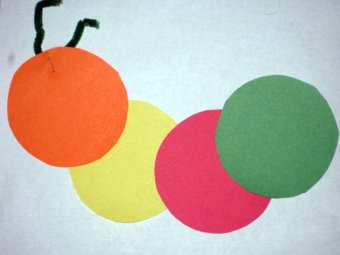
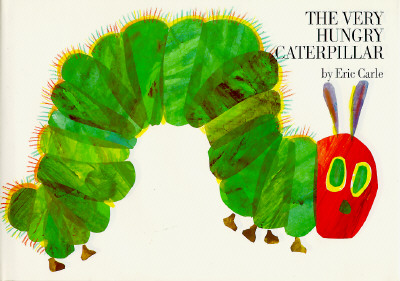
The second objective I had was to develop a therapy session for students with articulation and phonological processing disorders. I geared my lesson plan towards an articulation group. The group was comprised of six 6-year old kindergarten boys all possessing articulation problems. The lesson was individualized for each child and based around the book “The Very Hungry Caterpillar.” The objective of the lesson was to get each child to correctly produce the speech sound presented to them and from that they earned a “reward” of sorts. The words, which contained the speech sounds, were all found within the story.
I have learned in many of my classes, particularly Phonetics and Speech Science, the differences between particular speech impediments and articulation disorders. Each student I worked with, regardless of their articulation of sounds being similar to another student, was unique. I had to observe the children first, learn their articulation deficiencies, as well as work with my supervisor before I was ready to begin producing the lesson. In Phonetics, you learn the pronunciation of sounds-how they are supposed to be pronounced and also all of the different ways people produce them, based on their individual articulation. I learned from Speech Science where in the vocal tract, which extends from the pharynx all the way until the sound comes out through a person's lips, sounds are produced and where these sounds may go "astray" so to speak. Without this prior knowledge, I would not have been able to identify which sounds each student had difficulty with and/or how to explain to them what to do in order for them to properly produce the sounds.
I learned from this lesson that each child learns differently and at a completely different pace. Every student, no matter how similar their speech impediment or articulation deficiency was to another student's, needed individual attention and instruction so that they could be properly assisted in producing the speech sounds. I was aware of all of these things going into the lesson but actually carrying out a speech therapy session brought it to life for me. My patience, my planning skills, and my ability to carry out a lesson that I had produced myself were all tested. I had to accommodate each one of the students before the lesson while planning it and making sure it was specific to their needs, during the lesson making sure that I was paying attention to the student and their articulation while at the same time keeping the other five students on task, and after the lesson working with my supervisor to go over the session and decide whether or not I had accomplished with the students what I had hoped to. I felt as though after the lesson that I had accomplished what I had set out to. The students actually had fun with the lesson, which is more than I could have planned for. They enjoyed the different aspects of it. It was not only a lesson based around articulation but it also incorporated visuals, as well as a "craft" aspect, allowing the students to assemble their caterpillar as they earned each colored body part. To me, learning should be an enjoyable thing. I know that I still get excited when I learn something new, or acquire a new skill. The students were able to earn rewards for learning, which at such a young age, is usually necessary in order to encourage future learning.
Before carrying out the lesson, I worked with my supervisor to identify which speech sounds were of difficulty for which children. The speech and language testing had already been done for each child by my supervisor. I used the results of these tests to individualize my lesson for each child. Within the group of 6 boys, there were 3 sets- 2 boys who have difficulty with the articulation of /r/ initial and /s/ initial sounds, 2 boys who have difficulty with the articulation of /l/ initial and voiced and voiceless “th” sounds and 2 boys who have difficulty with categorization.
I began the lesson by reading the book “The Very Hungry Caterpillar” to the students. I explained to them that for every correct response they gave, whether it be to articulate the sounds correctly, producing certain words or to answer categorization questions, they would receive a colored paper circle. On that circle, they would write their answer and draw a picture of their answer, then glue it to one large piece of paper. Three correct answers and three different colored circles would make up the body of their caterpillar.
The lesson was much easier said than done. Going into the lesson, I knew that I would be working with six 6 year-old boys who have very vibrant personalities and tons of energy. I’ve been working with them twice a week since January. They’re a difficult group because they’re all friends so actually getting work done in the short period of time we have to work with them isn’t always an easy task. I’ve watched my supervisor and observed how she is able to keep them on task. She uses a “reward” program with all of her students. For every 5 successful days of Speech Therapy that the students have, they receive a prize, which is usually a small toy or puzzle but the kids love it. This method seemed to work well with all of her students. They anxiously await prize day. So, I incorporated the “reward” aspect into my lesson. For every correct answer the students gave me, they received another piece of their caterpillar’s body that they were able to draw on.
Getting the lesson started was difficult at first because after reading the story, all the students wanted to do was talk about all of the different things the caterpillar ate within the story and which of those things were their favorite foods. I did my best to regain their focus and attention while my supervisor stayed off to the side and observed. After doing this, I explained what we were going to be doing and began asking the students questions.
Overall, the lesson went very well. The students enjoyed that they were able to not just do “work” but rather got to make a picture as well and bring the book to life. I took this approach because when working with such young students. It is important to remember that keeping their attention can be the hardest task of all. They need to be able to visualize what they are doing so a hands-on type lesson turned out to be the best way to go about doing so. Below is a copy of the groupings of students along with the words and questions used during the session.
Evidence 2
Lesson Plan
April 4, 2011
Kindergarten
Articulation and ESL
Group 1
Students 1&2
1.) Rain----"I fall from the sky and make everything wet. What am I?'
2.) Red ----What fruit in the story was red?
3.) Sun----What was shining down on the caterpillar when it was laying on the leaf?
Group 2
Students 3&4
1.) Leaf---What did the caterpillar eat to make his tummy ache go away?
2.) Thick----After eating all the food, the caterpillar was no longer thin and small. What was he?
3.) Third---What fruit did the caterpillar eat on the third day?
Group 3
Student 5&6
1.) What is a caterpillar?---a type of bug
2.) What is the opposite of “Warm?”---cold
3.) What did the caterpillar turn into?--a butterfly
I will read “The Very Hungry Caterpillar.” Each child has a set of words or questions which will be asked of them to either say or answer. The words or questions will reflect the testing done by my supervisor and her evaluations of the students. The words and questions will be geared towards each child's area of articulatory need. The colored circles will be blank. Once the student is able to correctly say the word given to them or answer a question, they will receive a colored circle. On that circle they will right their word or answer to their question and then draw a picture of it. The colored circles which will eventually make up the body of the caterpillar. As the children correctly pronounce their words or answer their questions, they will be able to add another piece of their caterpillars body.